ILL 208: Watercolor
Learn techniques for a vibrant painting medium
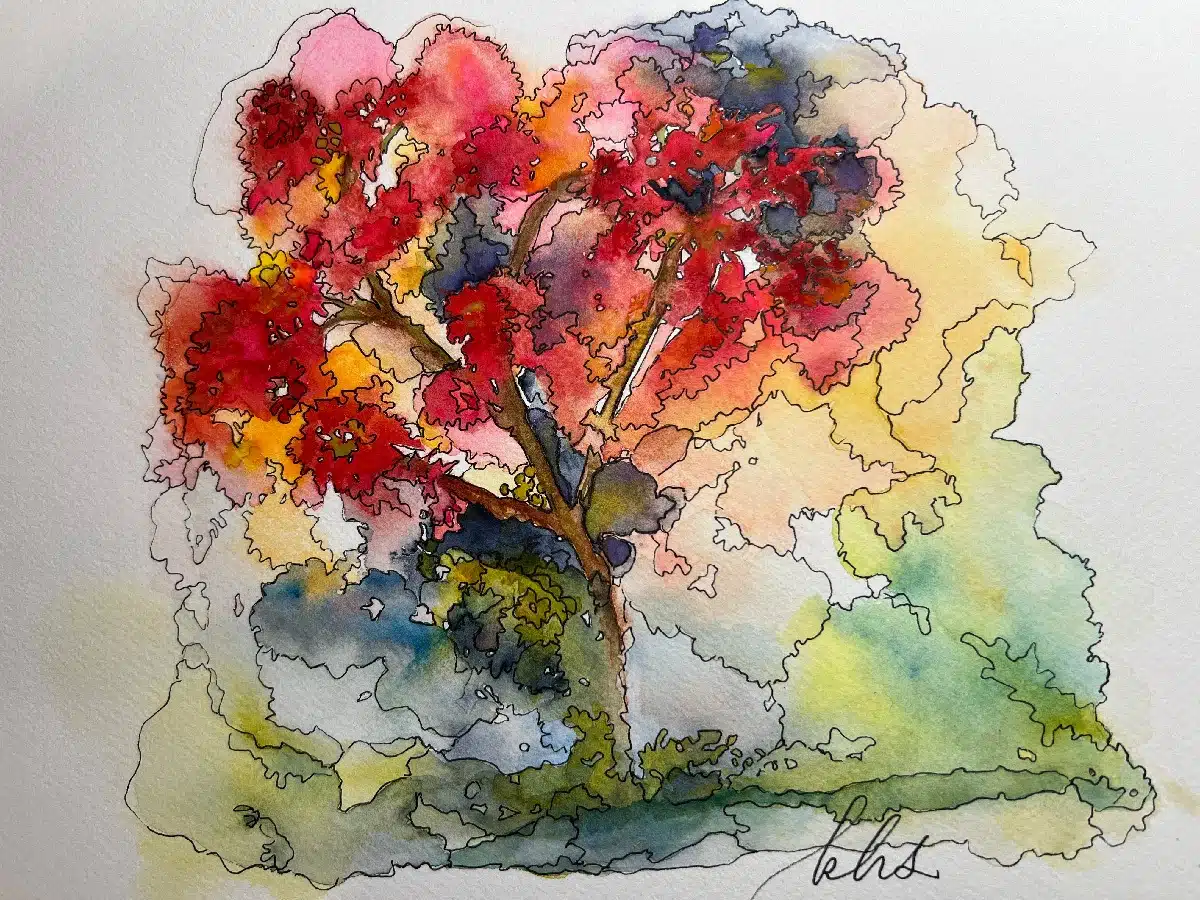
Watercolor has a rich tradition dating back centuries, and is still enjoyed by today's artists for its unique color effects and wide range of techniques. In this intensive online watercolor course, you'll explore traditional techniques including various washes, glazes, scumbles, resists, and more, getting feedback from a professional artist to help you hone your skills and perfect each project. The class involves creating a series of complete watercolor paintings.
About This Course
Project-Based Learning
Creative projects in this course build from monochromatic or limited palette pieces, and studies in the use of flat wash, graded wash, and glaze or scumble, to painting a thematic series from imagination.
What Skills Will I Develop?
Students in this course can expect to learn to:
- Select appropriate materials for watercolor painting.
- Create a color grid and demonstrate watercolor's unique color properties.
- Mix colors, create an appropriate water:paint ratio, and load the brush.
- Establish control over the brush and a wide range of brush marks.
- Use drawing, blocking, and underpainting to prepare a watercolor painting.
- Apply paint using washes, glazes, scumbles, textures, resists, and other important techniques.
- Use historical influence and artist studies to shape your personal style.
- Paint representationally and choose engaging subject matter.
- Articulate your painting concepts in individual pieces and series.
What Software and Supplies Do I Need?
- Computer with a minimum internet connection speed of 512 kbps. Broadband is strongly recommended.
- A digital camera or smartphone with the ability to produce high-quality images to present your artwork.
- Watercolor paints, paper, brushes, and other art supplies are described in depth at the beginning of the class. Supplies may vary based on student needs and should be purchased after entering the class.
- Basic experience in drawing and painting.
Course Instructor(s)
The course is taught by the following instructor(s):
 Kevin Hedgpeth
Kevin Hedgpeth is an Arizona native who makes his home in Phoenix, where he actively writes and illustrates in addition to teaching college-level visual arts courses. He is co-author and illustrator of several published books.
Course Outline
Essential Knowledge for Watercolor
Choosing the right materials is essential to creating watercolor art. In this first lecture you are introduced to the paints, brushes, papers, and other tools necessary. And you'll use them right away as you will also explore color's qualities and basic color mixing, and create a color grid. You'll gain an introduction to water to paint ratio and basic mark-making.
Special Techniques for Watercolor
Watercolor's wide range of techniques make this medium so versatile, and you'll explore many of them in this lesson, starting with mastering your brush strokes, correcting mistakes, and tips for underpainting. This week you'll learn to apply flat and graded washes, create interesting dry brush effects, work with wet-in-wet paintings, and use materials like tissue, plastic, and wax for infinite looks and style
Creating a Body of Work
The medium of watercolor is centuries old, and there is much to be learned from prominent traditional artists. While exploring many of these important figures, you'll learn to dissect their systems and apply historical influence to your work. Subject matter is explored, including why we learn representational painting and how to engage the audience with your subjects. Development of a series is also covered, and you'll apply what you've learned in the exercise, creating your own series of works.
Frequently Asked Questions (FAQ)
How Do The Courses Work?
Our courses are project-based and instructor-led. In each course you’ll complete a series of lectures, projects, discussions, and critiques designed to stretch your creative skills. Weekly assignment deadlines keep you on track, and with no set-logins or Zoom meetings, you can build your studies around your schedule.
Who Are The Instructors?
Our courses are developed and taught by our industry-leading faculty of creative professionals. This means that you’ll learn in-demand skills, get feedback on your work, and build a portfolio of creative work. View our Student Gallery for featured student projects.
When Can I Start?
Classes start January, April, and August, and this course can be completed as part of a 15-week term in 8 weeks. College credit from this course can be applied to a range of degree and certificate programs at Sessions College.
How Do I Register?
To register for a program, complete our program application. To register for this course on an individual basis, please contact our admissions team at admissions@sessions.edu. An Admissions Advisor will contact you to setup your enrollment.
| Course Tuition and Fees | |
|---|---|
| Tuition | $350/credit |
| Registration Fee* | $200 |
| Total Course Price | $725 |
Registration fees are nonrefundable after 5 days from enrollment.
Is Sessions College Accredited?
Yes. Since 2001, Sessions College has been accredited by the Distance Education Accrediting Commission (DEAC). The Distance Education Accrediting Commission is listed by the U.S. Department of Education as a recognized accrediting agency and is recognized by the Council for Higher Education Accreditation (CHEA).
RELATED PROGRAMS AT SESSIONS COLLEGE: